Home / Philosophy / Love and Lacan
Friendship
Meta physics = Above material reality
- Ideas and concepts do not exist in media, from books to video.
- These concepts do not exist in our minds, from experiences to learning.
- These concepts do exist in a conceptual space between, or among, people.
- human bonds concern communication, of objects, of experience, of information, of ideas and concepts, collectively called phenom ena.
Aristotle's Three Friendships
1. Utility
- Aristotle's lowest level of friendship
- With utility (usefulness) there is a temporality of the use, and uses end.
- One person being unresponsive in interactions of utility is not utility, it's exploitation.
2. Pleasure and pain reduction
- Pleasure with "people you enjoy spending time with, not because you have to or expect anything in return but simply because it’s enjoyable."
- This is not a quid pro quo arrangement; however, it too can be exploited.
- The pleasure may derive from many domains of life, humor or shared aesthetics, satiation of needed attention and seenness, entertainment and distraction.
- That "pleasure" may actually be a reduction of pain, of frustrations.
- Two friends who meet weekly to discuss life the universe and everything could spend that time commiserating about work. One kecerching, the other being wither an active empathetic listener or a mentor/advisor. Through the conversations, and subsequent easing of frustrations, angers, sadness, or any release of any negative emotions, pleasure occurred between the two friends, not simply within one.
3. Virtue
- "virtue...between people who genuinely admire each other’s character and want the best for each other without expecting anything in return. "
- Virtue is a synergy of many traits and must be greater, broader, more depthful (choose your metaphor) than individual parts.
- Entelechly is not merely a synergy of parts, it's the actualization of the potential of each part, not the final summation and statement of what is virtue or virtuous.
- Virtue rises from many traits:
- the potential for truth, realized
- the potential for justice, realized
- the potential for integrity, realized
- the potential for earnestness, realized
- the potential for forgiveness, realized
- To Aristotle, the important aspect of virtue is not to simply BE virtuous or to CLAIM virtue (such an extreme would be outside the Greek Golden Mean) but to seek to express the sub-traits of virtue at all times.
- Having the potential of a trait but not realizing that trait into an action within the world is hamartia, missing the mark, the origin of the word sin.
Love
- Three categories of Love: Lust, Attraction, Attachment
- Debunking Love as Chemicals
Lacan
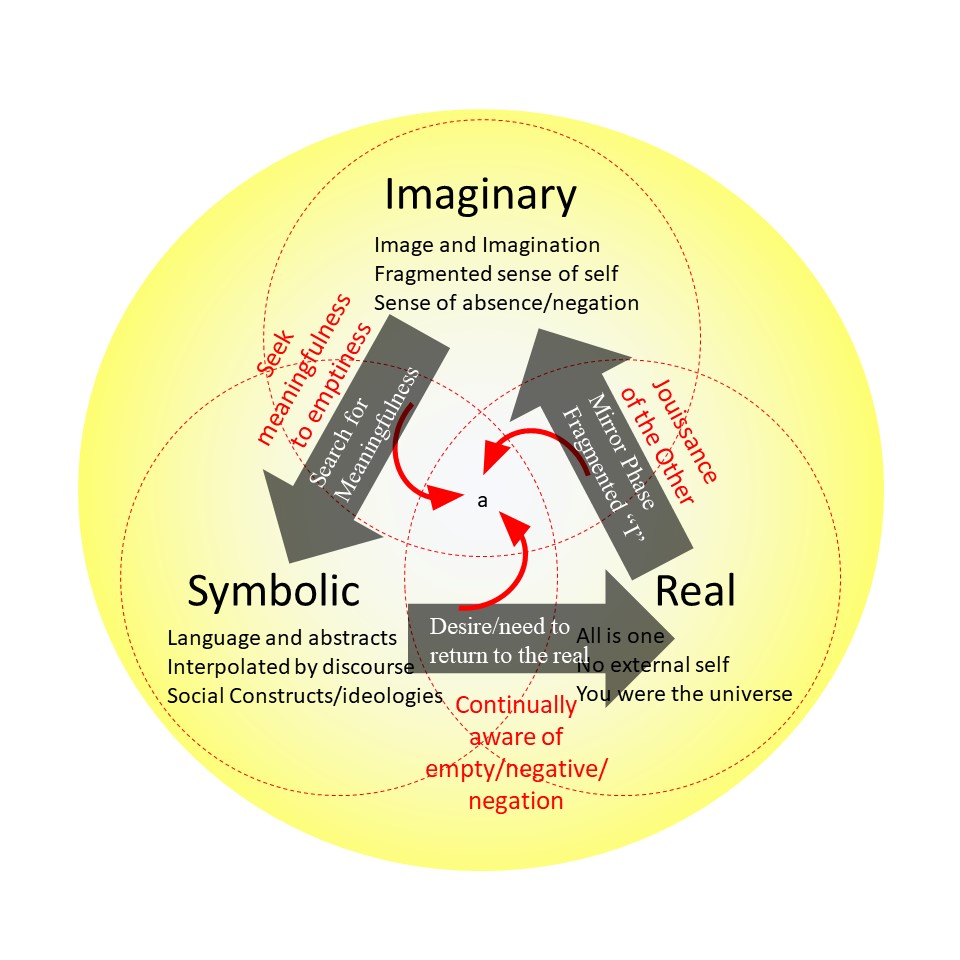
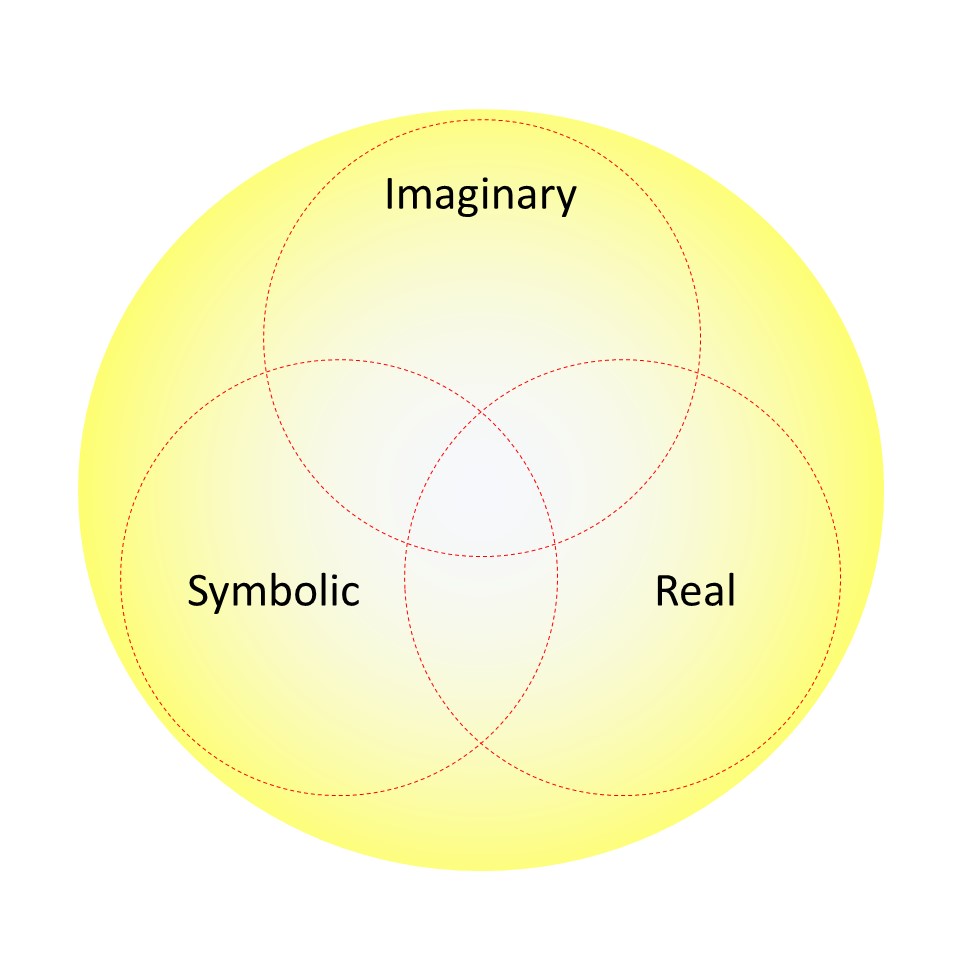
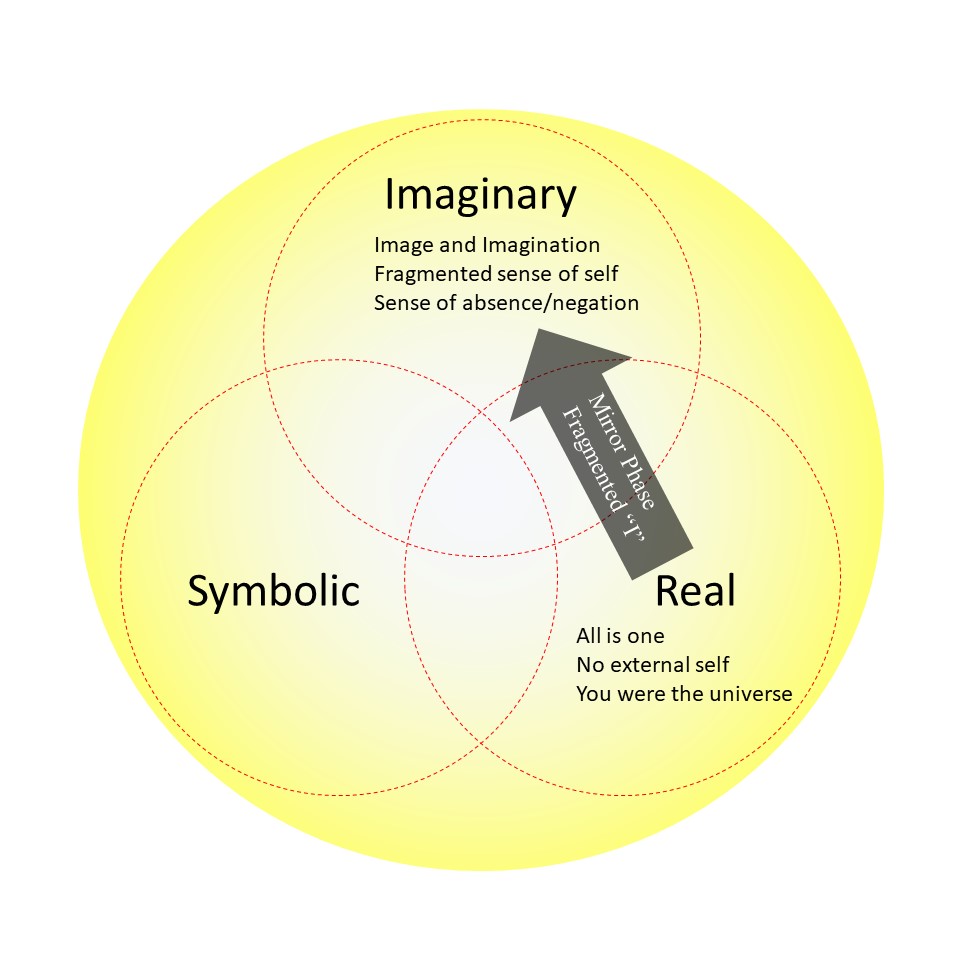
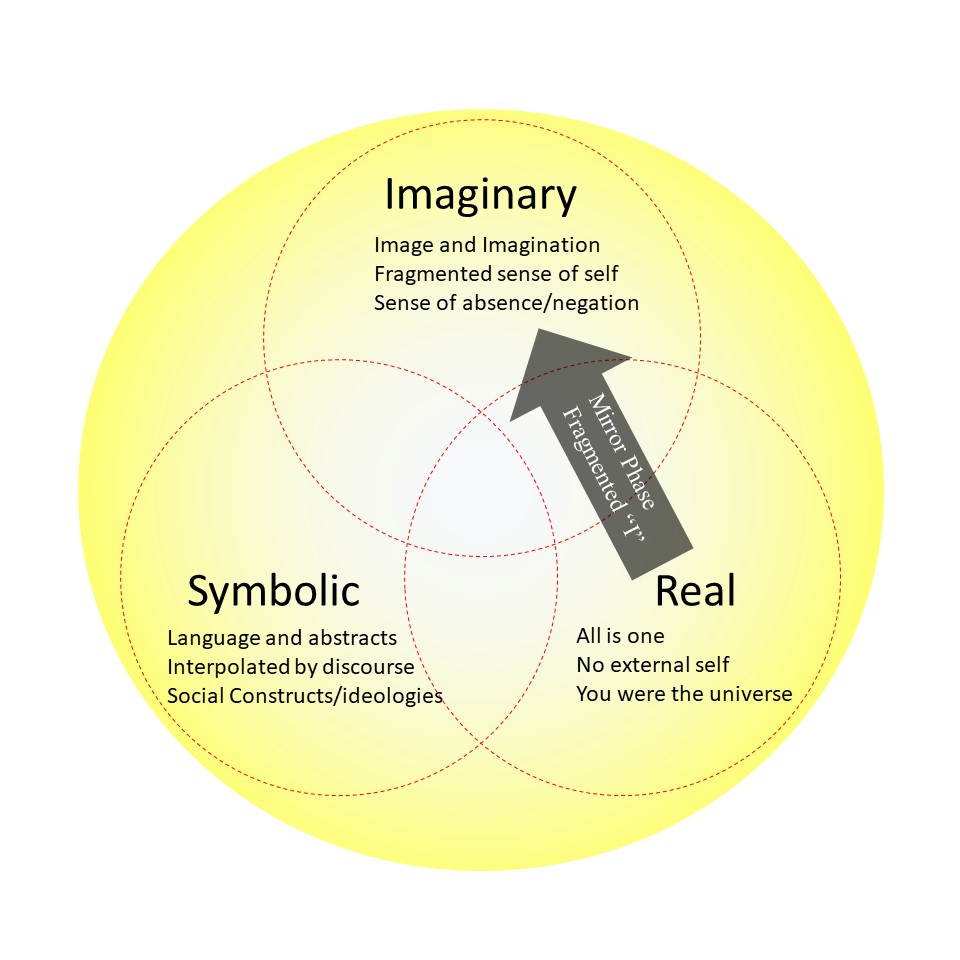
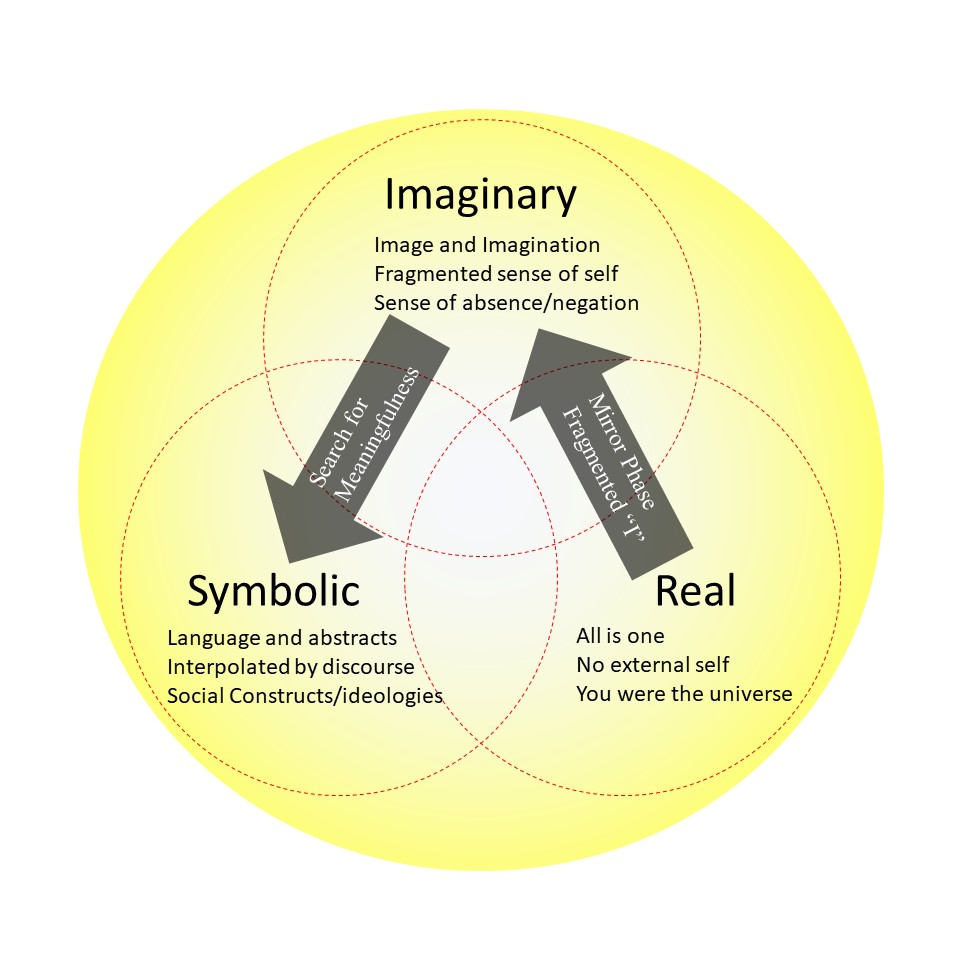
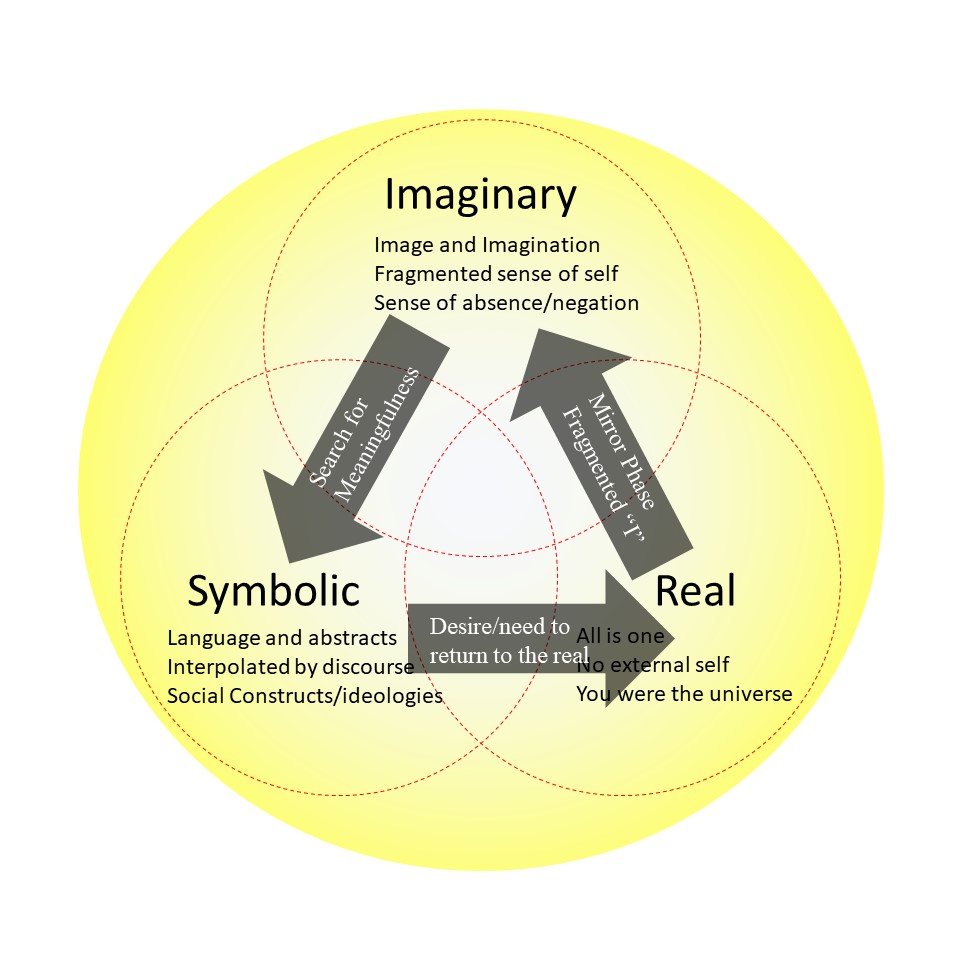
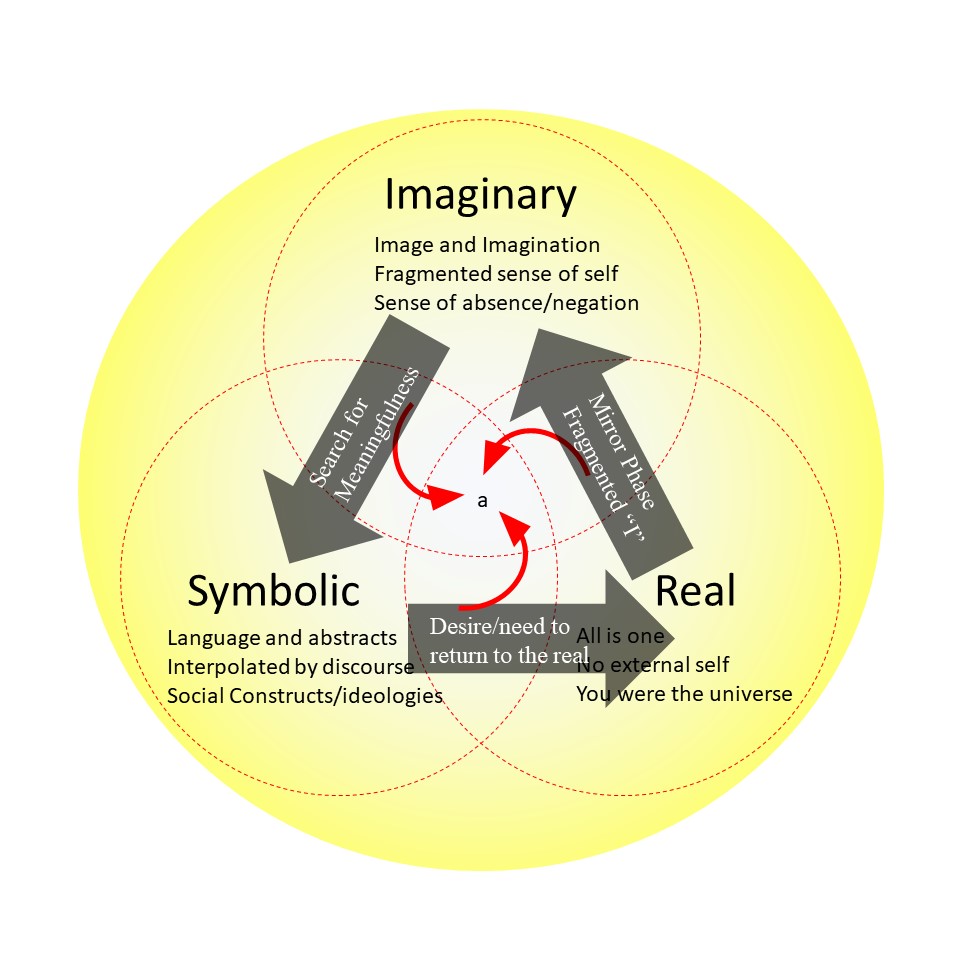
Real, Imaginary, Symbolic
The three aspects: Real, Imaginary, Symbolic
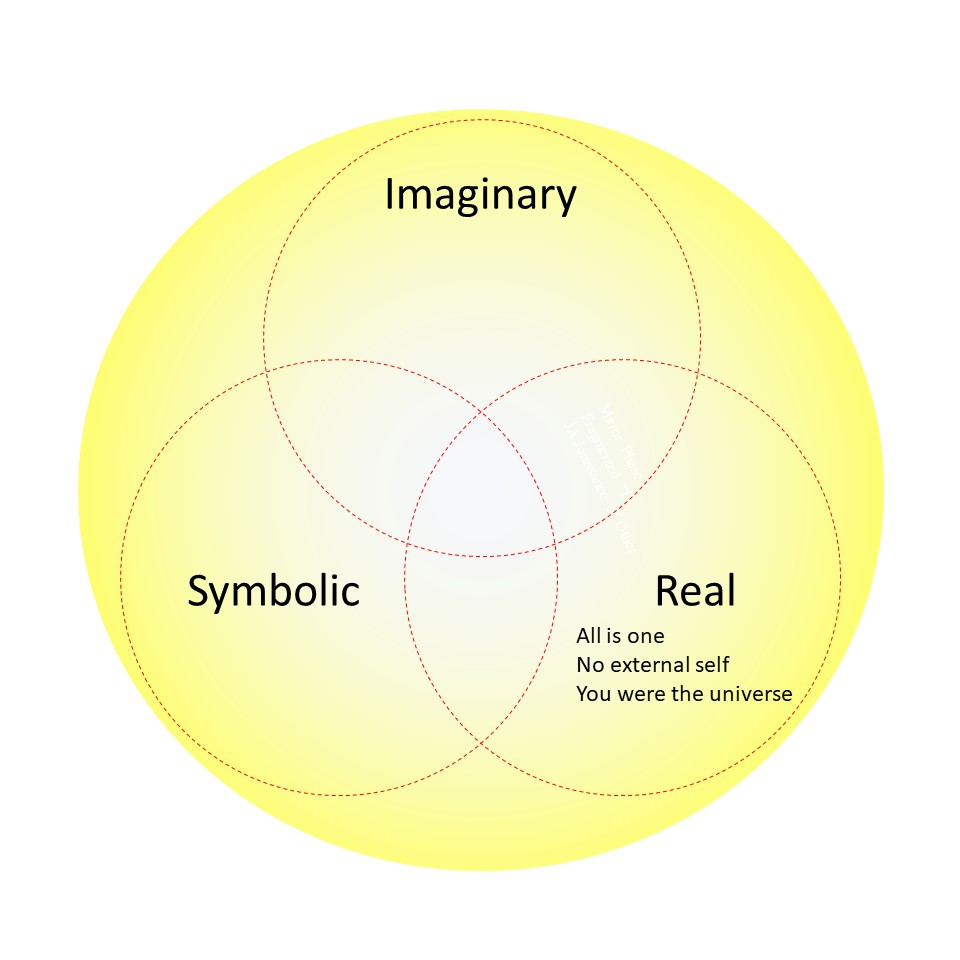
The Real
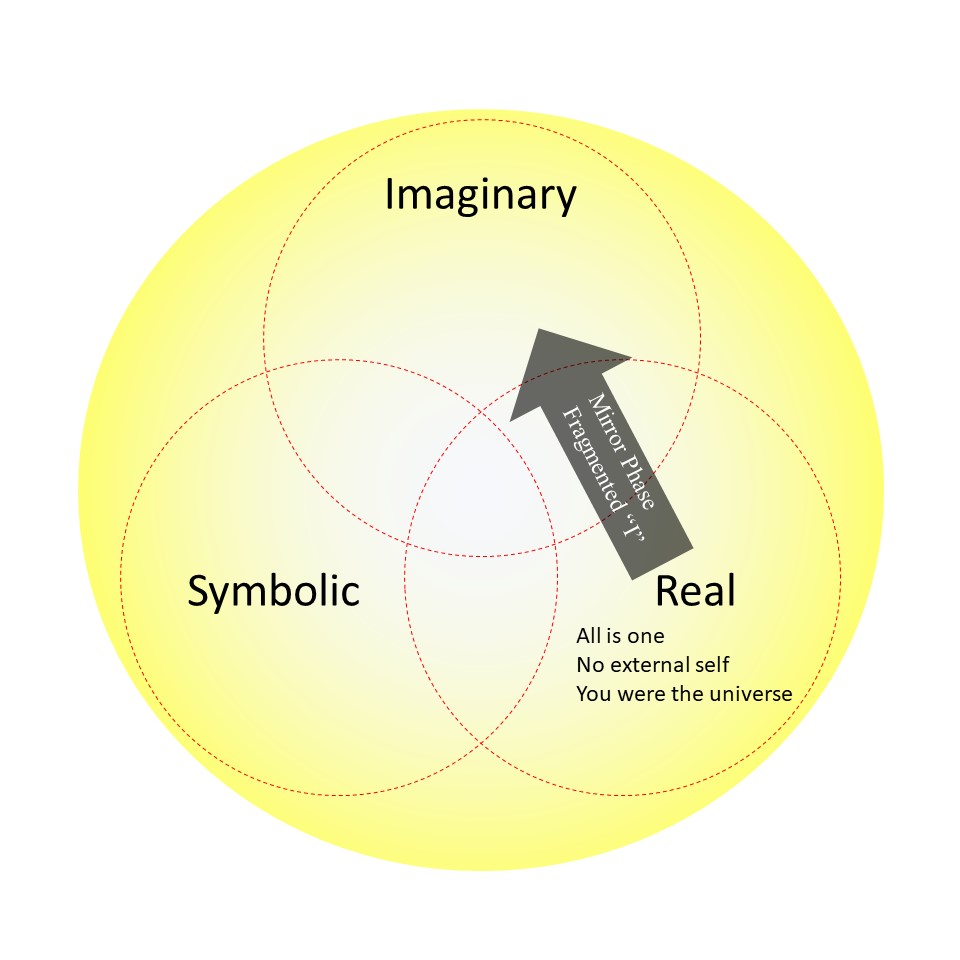
Lacan's Order of the Real, pleasure, Extimacy, Symptom and the Thing
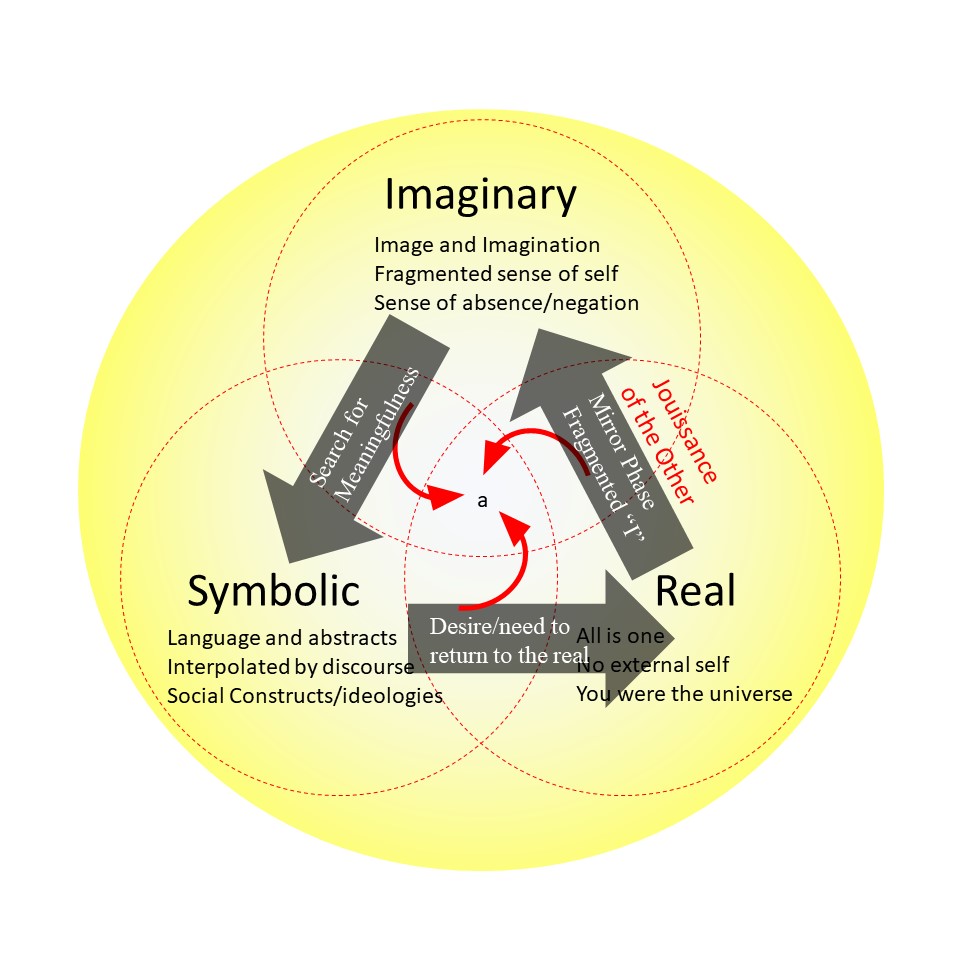
Mirror Phase
The Imaginary
Lacan's Imaginary Order
The Symbolic
The Search for Meaning
The Desire to Return to the Real
Objet petit a (the little a)
Jouissance of the other
To fill the Emptiness with Meaning
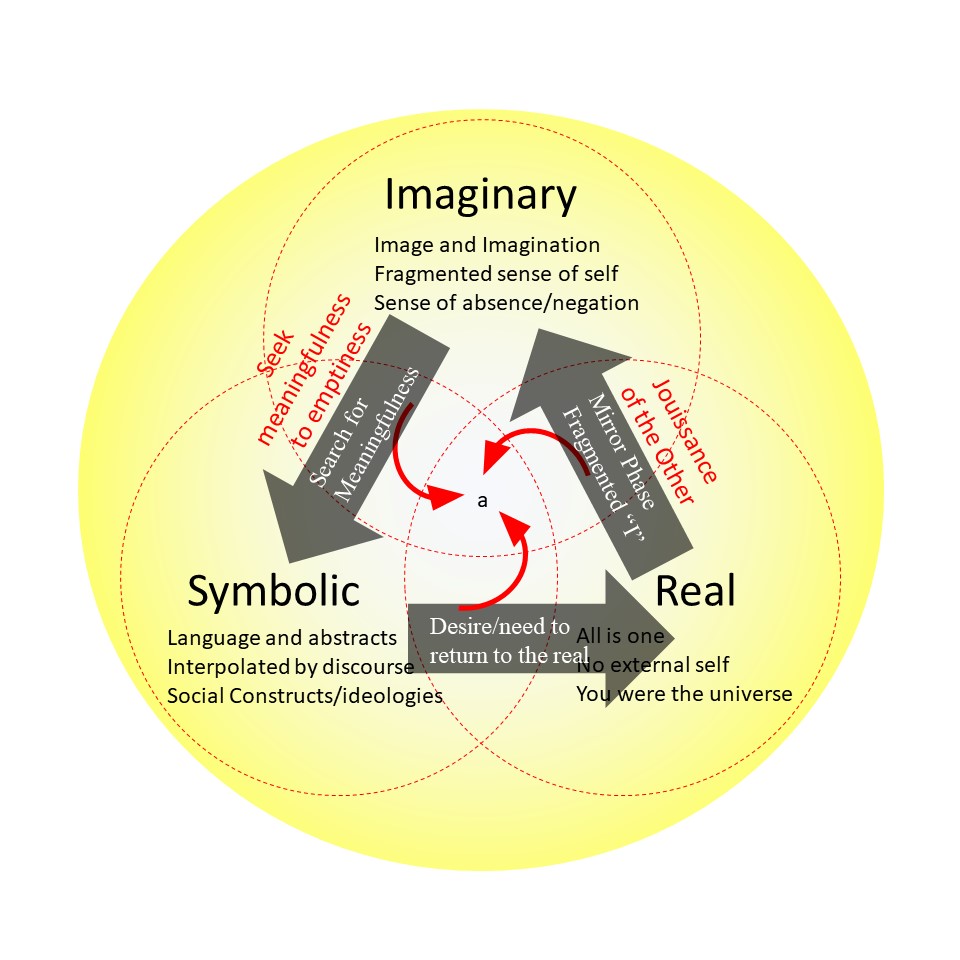
Awareness of more emotiness