Home / CC / Building a New Idea
Stage 4
Build an Idea
Warp to...
- Bubble Map
- Broader Scope of Research
- What's your Purpose of the Research
- Current articles in the Course
Bubble Map
Printable Bubble Map
The Bubble map is an exercise in extending your research into many other domains/disciplines. The aim is to first expand the research far beyond a 15 minute presentation or 20 page paper, then to reduce the research to a more concise focus.
Broader Scope of Questions
- History
- first mention of or first narrative of
- lineage or parentage
- What lineage of theories does your work connect to?
- If not lineage, does your work hinge on a specific theorist or theorists
- Genesis of interest
- What sparked an interest in this research
- Bring the sexy
- What causes others to be alerted to your presentation
- What is enticing, intriguing, enigmatic, or curiosity piquing?
- What does your research add to others' understanding of your topic?
- What would professors and teachers get out of your presentation?
- People like to take ideas from PCA back to their classroom
- What's the main point you want your audience to understand
- Above all else, what one idea should they understand from your research?
- What's the most interesting story or anecdote from your research?
- So what?
- Why do your research findings matter and to whom do does it matter?
What purpose does your research serve?
- Undergraduate level Literary Device Paper: Applied Concepts and Devices
- Unacceptable for PCA.
- Applies an older, traditional concept or narrative device to a narrative.
- Using symbols, metaphors, motifs, etc.
- The Literary Devices, which are basic Middle School or High School concepts.
- Undergraduate Level Theory Driven Paper: Applied Theories
- Unacceptable for PCA.
- Applies an older, traditional theory to a narrative, such as Plato's Allegory of the Cave, Sartre's concept of Dread/Angst, or Veblen's Conspicuous Consumption.
- Level 3 through Level 8 theory papers written in my Composition 2 course.

- Shaping Popular Discourse through Professional Writing: Adding to a current discussion among the Literati.
- Like memes, there are usually ideas du jour among the Literati. Sometimes these last for weeks; sometimes for years. Sometimes they rise out of more academic work; sometimes they are just a discussion that someone starts, and the discussion roils forth.
- One former Student's PCA research on the Death of Adulthood in American Culture added to a Literati discussion from a decade ago concerned the lack of mature (40+ year old) characters in TV shows.
- Literati: See Stage 2 for the list of popular Literati sources.
- These literati ideas du jour are not what's in the swiftly churning 24-hour news cycle or what is "trending" or what is the latest hot button, open-nerve, twitter-esque/ tumbler-speak fleeting and flitty mindscape.
- Shaping Popular or Academic Discourse: Travelling an idea across disciplines.
- Uses an idea/concept/theory from one discipline (such as Psychology) to apply to another discipline to create a new are of research.
- Such as Hailey's research of personality disorders on female characters in Sci-fi & Fantasy.
- Or, this idea that uses psychology in the chapter "The Psychological Process and Cost of Killing in an Undead Wasteland" The Walking Dead Psychology: Psych of the Living Dead
- Or, this article that uses a concept of Risk Society from economics to apply to post-apocalyptic stories.
- Master's Level Work to Shape the Discipline: Amend/Update a current theory
- Uses an existing theory but updates/ amends that theory toward a more applicable use concerning narratives and/or an era/worldview.
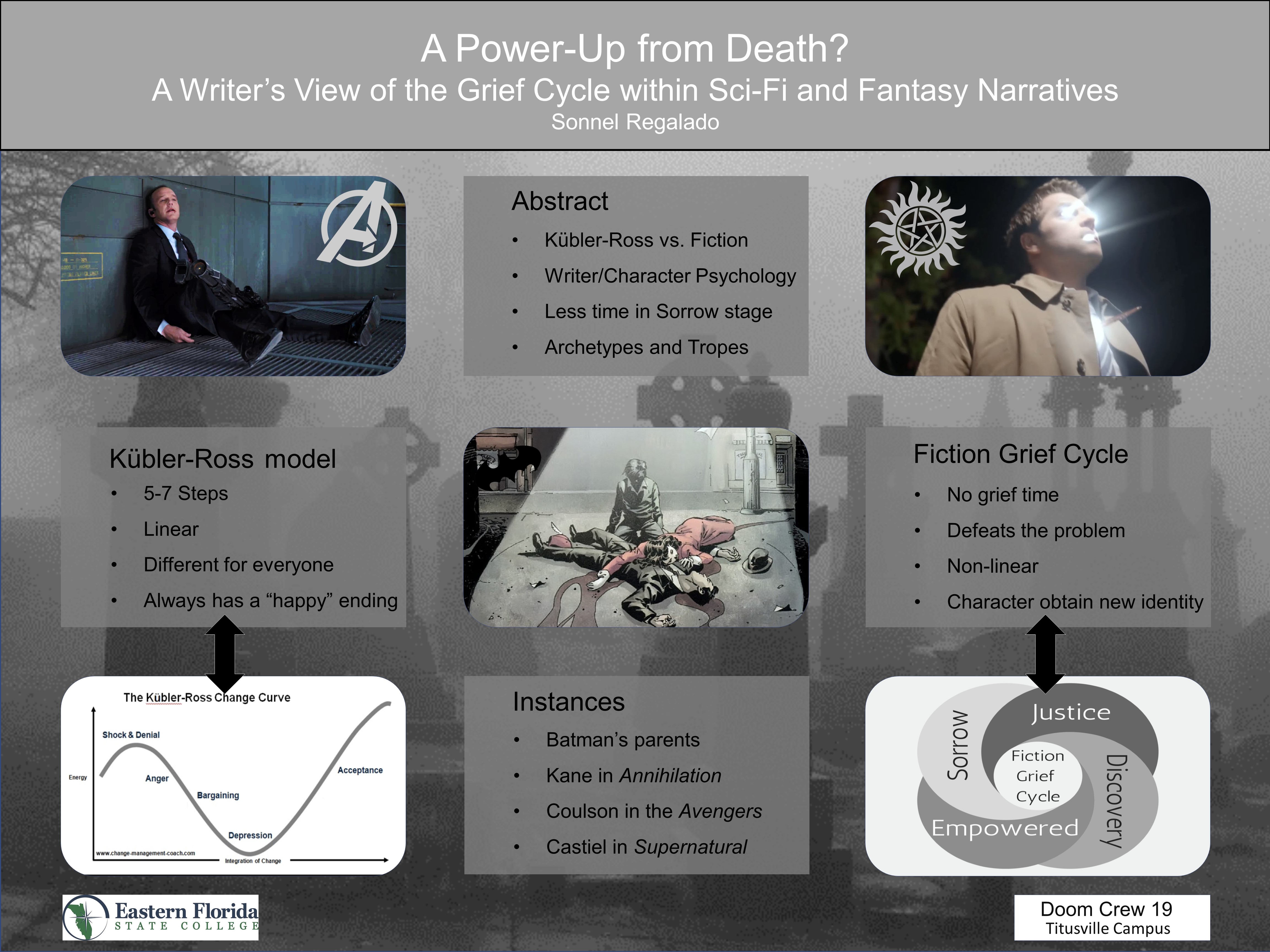
- Sonnel's grief cycle inferred from hero films rather than pulled from psychology and applied to films. While this is a new cycle, she amended/updated current psychological grief cycles in relation to hero films.
- This concept of Anthrop-scene in "The Anthropo-scene: A guide for the perplexed" was du jour for a few decades. while it is still used, currently the concept has been denied offical position in Anthropological studies
- PhD Level Work to Shape the Discipline: Creating and utilizing a New Theory
- Created a new theory to analyze narratives, sometimes including how that helps us analyze our world in a new way.
- A new theory can help shape a discipline (such as Humanities, or English Literature, or Film)
- Guitton's research (using the burn chart on He-man characters) created a new method by which we can see the limits of creativity.
- Matt Hudson's extension of Barthes' idea of the Enigma and the idea of Primary and Secondary characters to create the concept of the Enigmatic Tertiary character.
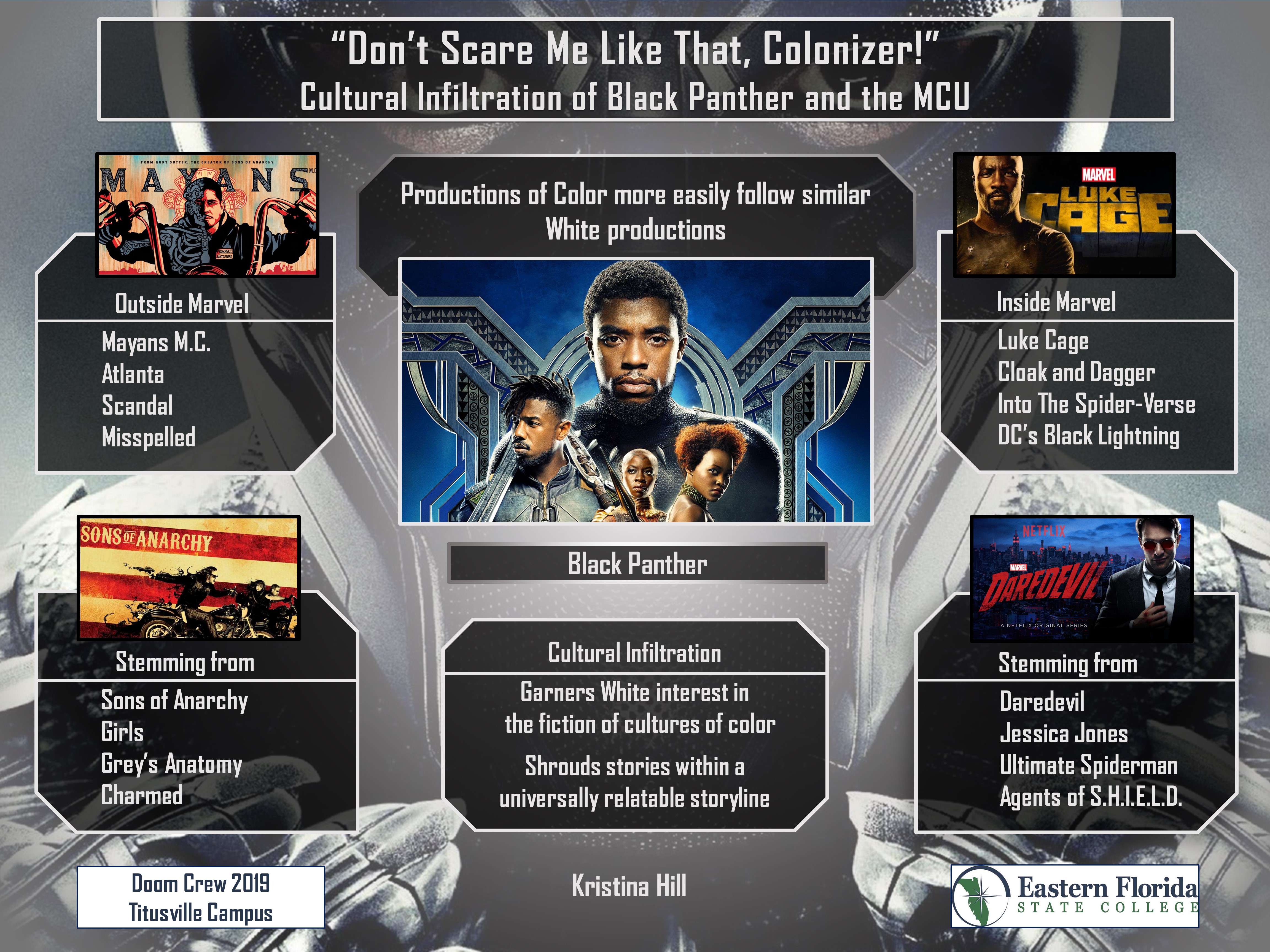
- Kristina Hill's revision and new theory of the term "cultural infiltration" allows us to understand a new subversion of/about power, knowledge, and how films can enter/ irrupt into a broader market.